oral exam guide private pilot pdf
Summary
Nervous about your PPL oral exam? Don’t be! Download our FREE, comprehensive study guide in PDF format. We break down tricky questions & boost your confidence. Get prepared now!
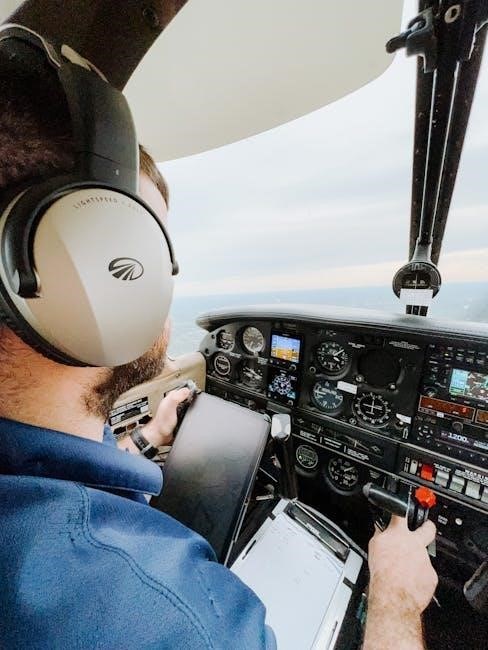
Oral Exam Guide for Private Pilot Certificate: A Comprehensive Plan
Comprehensive preparation is key! Several oral exam guides, often available as PDF downloads, assist student pilots. Resources like ASA offer detailed study guides.
These guides reference the FAR/AIM, PHAK, AC 00-45G, and AC 00-6A, alongside the Plane Operating Handbook (POH). They cover certificates, medical requirements, and regulations.
Exam guides streamline studying for the private pilot checkride, offering a structured approach to mastering essential knowledge. They are useful throughout training!
The oral exam is a crucial component of achieving your Private Pilot Certificate, evaluating your understanding of aviation principles beyond just flight skills. It’s a conversational assessment conducted by an FAA examiner, designed to gauge your knowledge and decision-making abilities as a pilot.
Many resources, including comprehensive oral exam guides often available in PDF format, are designed to prepare you for this stage. These guides, such as those offered by ASA, aren’t meant to provide answers, but rather to stimulate thought and ensure you understand the ‘why’ behind aviation regulations and procedures.
Preparation is paramount. Don’t wait until the last minute! Utilizing a guide early in your training allows you to identify knowledge gaps and reinforce understanding. The exam isn’t about memorization; it’s about demonstrating a solid foundation of aeronautical knowledge and the ability to apply it safely and effectively. Think of it as a discussion, not an interrogation.
Focus on understanding the core concepts, referencing materials like the FAR/AIM and the Pilot’s Handbook of Aeronautical Knowledge (PHAK). A well-prepared pilot approaches the oral exam with confidence, ready to demonstrate their commitment to safe and responsible flying.
Purpose of the Oral Exam

The primary purpose of the Private Pilot oral exam isn’t to trick you, but to verify your understanding of aviation principles and regulations, ensuring you possess the knowledge to operate an aircraft safely and legally. It assesses your ability to apply that knowledge to real-world scenarios.
FAA examiners use the oral exam to evaluate your decision-making process, risk assessment skills, and overall aeronautical judgment. They want to confirm you understand why things are done a certain way, not just how to perform a maneuver. Resources like private pilot oral exam guides, often found as PDF downloads, help prepare you for this in-depth discussion.
These guides emphasize that the exam isn’t a test of rote memorization. Instead, it’s a demonstration of your ability to think critically and make sound judgments in various flight situations. The examiner will probe your knowledge of topics ranging from aerodynamics to airspace regulations.
Ultimately, the oral exam’s goal is to ensure you’re a knowledgeable, responsible, and safe pilot, capable of handling the challenges of flight. Thorough preparation, utilizing resources like ASA’s study materials, is crucial for success.
FAA Regulations & References (FAR/AIM)
A solid grasp of the Federal Aviation Regulations (FARs) and the Aeronautical Information Manual (AIM) is fundamental for the Private Pilot oral exam. Examiners will extensively question your knowledge of these documents, testing your understanding of rules governing flight operations.
Oral exam guides, frequently available as PDFs, consistently highlight the importance of the FAR/AIM. They emphasize knowing where to find specific regulations and interpreting their meaning. Expect questions about airspace classifications, right-of-way rules, and aircraft certification requirements.
Specifically, Part 61 of the FARs, dealing with pilot certification, is a key area of focus. You should be familiar with the experience requirements for a Private Pilot Certificate and the regulations governing flight training. The AIM provides guidance on procedures and best practices, complementing the legal requirements outlined in the FARs.
Resources like ASA’s guides often include cross-references between the FARs and AIM, aiding in your study process. Demonstrating proficiency with these references is crucial for showcasing your commitment to safe and compliant flight operations during the oral exam.
Pilot Certificates and Medical Requirements
Understanding pilot certificate classes and associated medical requirements is paramount for the Private Pilot oral exam. Examiners will assess your knowledge of the different certificate levels – student, recreational, private, commercial, and airline transport pilot – and their respective privileges.
Oral exam guides, often found as PDF downloads, dedicate significant sections to this topic. They detail the eligibility requirements for each certificate, including age, language proficiency, and training hours. A key focus is the Private Pilot Certificate and its limitations.
Regarding medical certificates, you must know the classes (first, second, and third) and the minimum requirements for each. As a Private Pilot, a third-class medical certificate is sufficient, but you need to understand the conditions that could disqualify you or require waivers.
Guides like those from ASA emphasize knowing the duration of each medical certificate and the process for renewal. Be prepared to discuss the responsibilities of pilots regarding medical certification and reporting any medical conditions to the FAA. Demonstrating this knowledge is vital for a successful exam.
Aircraft Documentation – POH/AFM

Proficiency with Aircraft Flight Manuals (AFM) and Pilot’s Operating Handbooks (POH) is crucial during the Private Pilot oral exam. Examiners will thoroughly test your ability to locate and interpret critical information within these documents.
Oral exam guides, frequently available as PDF resources, stress the importance of knowing the specific POH/AFM for the aircraft you’ll be flying during the checkride. Don’t generalize; be familiar with that aircraft’s documentation.
You should be able to quickly find and explain key data points, including weight and balance limitations, performance charts (takeoff distance, landing distance, climb performance), emergency procedures, and systems descriptions. Understanding the limitations section is particularly important.
Guides from ASA and similar publishers highlight the need to know where to find information on stall speeds, maneuvering speeds, and maximum operating altitudes. Be prepared to discuss how to use the POH/AFM for pre-flight planning and in-flight decision-making. Knowing the AFM/POH demonstrates a commitment to safe flight operations.
Weight and Balance Calculations
Mastering weight and balance (W&B) calculations is a cornerstone of the Private Pilot oral exam. Examiners assess your understanding of how weight distribution affects aircraft performance and stability. Oral exam guides, often found as PDF downloads, dedicate significant sections to this topic.
You must demonstrate the ability to calculate the aircraft’s center of gravity (CG) for various loading conditions, ensuring it remains within the prescribed limits. Be prepared to explain the impact of exceeding these limits on controllability and safety.
Resources like ASA’s guides emphasize knowing the empty weight, useful load, and moment arm of the aircraft. You’ll need to apply these values to determine the CG location with passengers, fuel, and baggage onboard.
Understand the terms “forward CG” and “aft CG” and their respective effects. Examiners may present you with scenarios requiring you to recalculate the W&B after changes in loading. Accurate W&B calculations are vital for safe flight operations and a successful checkride.
Performance Calculations
Performance calculations are crucial for safe flight planning and a successful Private Pilot oral exam. Examiners will evaluate your ability to interpret and apply data from the Aircraft Flight Manual (AFM) or Pilot Operating Handbook (POH). Oral exam guides, frequently available as PDFs, provide practice scenarios and explanations.

Be prepared to calculate takeoff distance, landing distance, rate of climb, and cruise performance under various conditions – altitude, temperature, and weight. Understand how these factors influence aircraft performance.
Resources like ASA’s guides stress the importance of density altitude. You must be able to calculate it and explain its impact on takeoff performance. Examiners may ask about the effects of wind, runway slope, and flap settings.
Demonstrate proficiency in using performance charts and tables within the POH. You should be able to determine whether a particular takeoff or landing is feasible given the available resources and conditions. Accurate performance calculations are essential for making informed decisions and ensuring flight safety.
Aerodynamics and Principles of Flight
A solid understanding of aerodynamics is fundamental to safe piloting and a key component of the Private Pilot oral exam. Examiners assess your grasp of the four forces of flight – lift, weight, thrust, and drag – and how they interact. Oral exam guides, often found as PDF downloads, offer comprehensive reviews of these principles.
Be prepared to explain Bernoulli’s principle and how it relates to lift generation. Discuss the angle of attack, stall speed, and factors affecting stall recovery. Understand the concepts of adverse yaw, slip, and skid, and how to correct them.
Resources like ASA’s guides emphasize the importance of understanding wing design, including flaps, slats, and spoilers, and their effects on lift and drag. Examiners may ask about stability, maneuverability, and load factors.
Demonstrate your knowledge of how various atmospheric conditions, such as temperature and altitude, affect air density and, consequently, aerodynamic performance. A thorough grasp of these principles is vital for making informed flight control decisions.
Meteorology – Weather Reports & Forecasting

A thorough understanding of meteorology is crucial for flight safety and a significant portion of the Private Pilot oral exam. Examiners will assess your ability to interpret weather reports and forecasts, and make informed go/no-go decisions. Oral exam guides, frequently available as PDF documents, provide detailed coverage of this subject.
Be prepared to decode METARs and TAFs, understanding the various abbreviations and symbols used. Discuss the significance of different cloud types and their associated weather conditions. Know how to interpret surface analysis charts and prognostic charts.
Resources like ASA’s guides emphasize the importance of recognizing fronts – cold, warm, stationary, and occluded – and their impact on weather patterns. Understand the concepts of atmospheric stability and instability, and how they relate to turbulence and icing.
Demonstrate your knowledge of wind shear, microbursts, and other hazardous weather phenomena. Be able to explain how to obtain current weather information from various sources, including Flight Service and online resources.
Navigation – Charts, Plotting, and Electronic Aids
Proficiency in navigation, both traditional and modern, is essential for safe flight operations and a key component of the Private Pilot oral exam. Oral exam guides, often found as PDF downloads, dedicate significant sections to this topic, ensuring comprehensive preparation.

You should be able to confidently identify various chart symbols and features on sectional charts, including airports, navigation aids, terrain, and airspace boundaries. Demonstrate your ability to accurately plot a course, calculate headings and distances, and determine estimated times of arrival.
Resources like ASA’s guides emphasize understanding magnetic variation and deviation, and their application to navigation. Be prepared to discuss the use of pilotage, dead reckoning, and radio navigation aids like VORs and NDBs.
Furthermore, demonstrate knowledge of GPS and other electronic navigation systems, including their limitations and potential failure modes. Understand WAAS and its benefits. Be ready to discuss backup navigation methods in case of electronic system failure.
Airspace Classification and Regulations
A thorough understanding of airspace classification and associated regulations is critical for pilot safety and a significant portion of the Private Pilot oral exam. Oral exam guides, frequently available as PDF documents, provide detailed coverage of this complex subject matter, aiding in effective preparation.
You must be able to identify and describe the characteristics of each airspace class (A, B, C, D, E, and G), including altitude limitations, visibility requirements, and communication protocols. Demonstrate knowledge of special use airspace, such as restricted areas, prohibited areas, and military operations areas (MOAs).
Resources like ASA’s guides emphasize the importance of understanding airspace depicted on sectional charts and the regulations governing operations within each class. Be prepared to discuss the requirements for operating in controlled airspace, including transponder codes and radio communication procedures.

Furthermore, demonstrate knowledge of temporary flight restrictions (TFRs) and NOTAMs, and how to obtain this information before flight. Understand the implications of violating airspace regulations and the potential consequences.
Emergency Procedures

Mastering emergency procedures is paramount for pilot safety and a core component of the Private Pilot oral exam. Comprehensive oral exam guides, often found as PDF downloads, dedicate significant attention to this critical area, ensuring thorough preparation.
Be prepared to discuss procedures for various emergencies, including engine failure, electrical failures, fires, and loss of control. Demonstrate a clear understanding of the appropriate actions to take in each scenario, referencing the aircraft’s Pilot Operating Handbook (POH).
Resources like ASA’s guides emphasize the importance of prioritizing actions – Aviate, Navigate, Communicate – and executing emergency checklists accurately. You should be able to explain the procedures for forced landings, including site selection and preparation.
Furthermore, demonstrate knowledge of emergency equipment onboard the aircraft and its proper use. Discuss procedures for dealing with in-flight icing, turbulence, and other hazardous weather conditions. Understanding emergency procedures builds confidence and enhances safety.
Radio Communication Procedures
Proficient radio communication is essential for safe and efficient flight operations, and a key focus during the Private Pilot oral exam. Oral exam guides, frequently available in PDF format, provide detailed instruction and practice scenarios to prepare candidates.
Expect questions regarding proper phraseology for various communications, including initial contact, requesting clearances, reporting position, and emergency calls. Demonstrate a clear understanding of standard radio frequencies and their uses.
Resources like ASA’s guides emphasize the importance of concise and accurate transmissions. Be prepared to explain procedures for squawking transponder codes, reading back clearances, and handling radio failures. Understanding proper communication protocols minimizes misunderstandings.
You should also be familiar with emergency frequencies (121.5 MHz) and procedures for declaring an emergency. Practice using phonetic alphabet for clarity and be prepared to discuss light gun signals. Effective radio communication is a cornerstone of aviation safety and professionalism.
Decision Making & Risk Management (IMSAFE)
Sound judgment and proactive risk management are paramount for pilot safety, and a significant component of the Private Pilot oral exam. Oral exam guides, often found as PDF downloads, dedicate substantial sections to this critical area, offering frameworks for evaluating flight risks.
The IMSAFE checklist – Illness, Medication, Stress, Alcohol, Fatigue, and Emotion – is central to pre-flight self-assessment. Be prepared to discuss how each factor can impair pilot performance and how to mitigate those risks. Demonstrate an understanding of hazard identification and risk assessment techniques.
Resources like ASA’s guides emphasize a conservative approach to decision-making. Expect questions about go/no-go decisions, weather minimums, and the impact of personal limitations. Explain how to effectively utilize resources like weather briefings and NOTAMs.
You should articulate the importance of scenario-based risk assessment and the ability to make informed decisions under pressure. A strong grasp of IMSAFE and risk management principles demonstrates a commitment to safe flying practices and responsible pilotage.
Human Factors & Physiology
The oral exam delves into how the human body and mind affect piloting performance. Private pilot oral exam guides, frequently available in PDF format, dedicate sections to human factors and aviation physiology, preparing candidates for detailed questioning.
Expect to discuss the physiological effects of altitude, hypoxia, spatial disorientation, and hyperventilation. Understand the symptoms and appropriate responses to each. Be prepared to explain how vision, hearing, and other senses impact flight safety.
Resources like ASA’s guides emphasize the importance of recognizing and mitigating the effects of fatigue, stress, and medication. Discuss the impact of circadian rhythms and strategies for maintaining alertness. Explain how factors like dehydration and carbon monoxide poisoning can affect pilot judgment.
Demonstrate an understanding of how cockpit workload, situational awareness, and communication contribute to human error. Articulating these concepts showcases a commitment to understanding the limitations of human performance and proactively managing associated risks during flight operations.
Cross-Country Flight Planning
Thorough flight planning is crucial, and the oral exam will rigorously assess your abilities. Private pilot oral exam guides, often found as PDF downloads, provide detailed checklists and explanations of the process. Expect questions covering all aspects of pre-flight preparation.
You’ll need to demonstrate proficiency in chart reading, route selection, and calculating true course, magnetic course, and wind correction angle. Be prepared to discuss the use of pilotage, dead reckoning, and navigation aids. Understanding how to obtain and interpret weather briefings is essential.

Guides from ASA and similar publishers emphasize calculating fuel requirements, estimating time en route, and determining alternate airports; Discuss the importance of weight and balance considerations for cross-country flights. Know how to file a flight plan and understand airspace restrictions along your route.

Demonstrate your understanding of NOTAMs, runway lengths, and airport services. Articulating a well-reasoned and comprehensive flight plan demonstrates a commitment to safety and responsible decision-making.
Common Oral Exam Questions & Preparation Strategies
Preparation is paramount for success! Many private pilot oral exam guides, readily available as PDFs, compile frequently asked questions. These resources, like those from ASA, help anticipate the examiner’s line of questioning and build confidence.
Expect questions on regulations (FAR/AIM), aerodynamics, weather, aircraft systems, and emergency procedures. Be prepared to explain concepts in your own words, not just recite definitions. Examiners assess understanding, not memorization.
Oral exam guides often include scenario-based questions, testing your decision-making skills. Practice articulating your thought process clearly and concisely. Don’t be afraid to ask for clarification if you don’t understand a question.
Utilize practice exams and mock oral exams with a flight instructor. Review the Pilot’s Handbook of Aeronautical Knowledge (PHAK) and the Airplane Flight Manual (AFM) thoroughly. A calm, confident demeanor and a willingness to learn are highly valued.