tie dye printable instructions
Summary
Unlock vibrant style! Get our easy-to-follow, free printable tie dye instructions. Perfect for beginners & pros – create amazing patterns today! ✨

Tie Dye Printable Instructions: A Comprehensive Guide
Embark on a vibrant journey! This guide details creating stunning tie-dye projects, from basic techniques to advanced methods, ensuring colorful, lasting results.
Understanding Tie Dye Basics
Tie dye is a wonderfully expressive art form, rooted in an ancient tradition of resist dyeing. Essentially, it involves folding, twisting, pleating, or crumpling fabric and binding it – creating areas that resist dye penetration. This results in unique and captivating patterns. The process relies on a chemical reaction between the dye, typically a fiber-reactive dye, and the fabric, most commonly cotton.
Soda ash (sodium carbonate) is crucial; it prepares the fabric by raising its pH, enabling the dye to bond effectively. Understanding this acid/base reaction is key to vibrant, lasting colors. Kits often include pre-mixed dyes, but investing in higher quality dyes from suppliers like Dharma Trading Co. yields superior results. Remember, controlling moisture levels – aiming for a ‘pancake’ thickness – and imposing control over folds are vital for achieving desired patterns.
Choosing Your Materials: Dyes, Fabrics & Tools
For vibrant tie dye, material selection is paramount. Cotton is the most receptive fabric, readily absorbing fiber-reactive dyes. While synthetics can be dyed, results are often less brilliant. Dyes come in various forms – powdered, liquid, and pre-mixed kits. Kits are convenient for beginners, but professional dyes from Dharma Trading Co. offer superior color saturation and longevity.
Essential tools include squeeze bottles for precise dye application, rubber bands or string (Aunt Lydia’s Crochet Thread offers greater control) for binding, gloves to protect your hands, and a well-ventilated workspace. Consider the impact of existing prints, like a NASA logo; lighter dyes work best to avoid obscuring details. Don’t underestimate the importance of soda ash for pre-treating fabric!
Preparing Your Fabric: Pre-Washing & Soda Ash Soak
Proper fabric preparation is crucial for optimal dye absorption. Begin by thoroughly washing your fabric to remove any sizing or finishes that could impede the dyeing process. This ensures the dye interacts directly with the fibers. Following washing, a soda ash soak is highly recommended, especially for cotton.
Soda ash (sodium carbonate) raises the fabric’s pH, creating an alkaline environment that facilitates a chemical reaction with fiber-reactive dyes, effectively locking in the color. After soaking, use a washing machine’s spin cycle – without water spraying – to achieve optimal moisture. This allows the fabric to readily absorb dye, avoiding dilution. Remember, soda ash is basic, and dyes are acidic; this reaction is key!
Popular Tie Dye Techniques
Explore a world of colorful possibilities with diverse tie-dye techniques! The spiral, a classic, involves pinching fabric and twisting into a vortex before binding. For a bullseye, pinch and pull sections of fabric upwards, securing with bands. Stripes are achieved by folding the fabric accordion-style and binding tightly. The freeform scrunch technique involves simply crumpling the fabric randomly and securing it.
Each technique yields a unique pattern, limited only by your imagination. Experiment with different folding and binding methods to create personalized designs. Remember, the tighter the binding, the more white space will remain, creating sharper contrasts. Don’t be afraid to combine techniques for truly original results!
Spiral Tie Dye
Master the iconic spiral tie-dye! Begin by laying your pre-washed fabric flat. Pinch the fabric at the center point where you want the spiral to originate. Twist the fabric clockwise (or counter-clockwise) from that center point, creating a tight, flat spiral resembling a cinnamon roll.
Secure the spiral with rubber bands or string, dividing it into wedge-shaped sections. The more sections you create, the more intricate the spiral will be. Ensure the fabric is tightly bound to prevent dye from bleeding into unwanted areas. Apply dyes to each section, using contrasting colors for a vibrant effect.
Bullseye Tie Dye
Create striking bullseye patterns! Start with a pre-washed, damp garment. Pinch the fabric at the point where you want the center of your bullseye. Pull the fabric upwards, creating a cone shape. Secure the fabric with rubber bands at intervals down the cone, creating sections.
Apply dyes to each section between the rubber bands, using different colors for a classic bullseye effect. Consider using darker colors towards the base and lighter colors towards the tip for visual depth. Ensure the dye saturates the fabric within each section. For a more complex look, experiment with multiple cones on a single garment!
Stripes Tie Dye
Achieve classic striped designs with ease! Begin with a pre-washed, damp fabric. Fold the fabric accordion-style (like a fan) lengthwise, creating neat, even pleats. The tighter and more consistent the pleats, the sharper your stripes will be. Secure the folded fabric tightly with rubber bands spaced evenly along its length.
Apply dyes along the exposed ridges between the rubber bands, alternating colors for a vibrant effect. Ensure the dye penetrates deeply into the folds for consistent color. For varied stripe widths, adjust the spacing of the rubber bands. Remember, controlling the folds is key to achieving a visually appealing striped pattern!
Scrunch Tie Dye
Embrace spontaneity with the scrunch technique! Lay your pre-washed, damp fabric flat. Randomly scrunch and gather the fabric, creating a textured, uneven surface. Secure the scrunched fabric tightly with multiple rubber bands in various directions – the more, the merrier! This creates numerous small sections for dye to penetrate.
Apply dyes liberally across the scrunched fabric, allowing colors to blend and interact organically. Don’t be afraid to experiment with color combinations! Ensure dye reaches all the crevices for a fully saturated result. Avoid creating a large, random ball; aim for a pancake-like thickness for optimal dye absorption and a cooler final look.
Folding and Binding Techniques for Different Patterns
Precision folding unlocks diverse designs! For spirals, pinch the fabric’s center and twist, then bind with rubber bands like pizza slices. Bullseye patterns involve pinching and pulling sections upwards before binding. Stripes require accordion-style folding, secured tightly with bands.
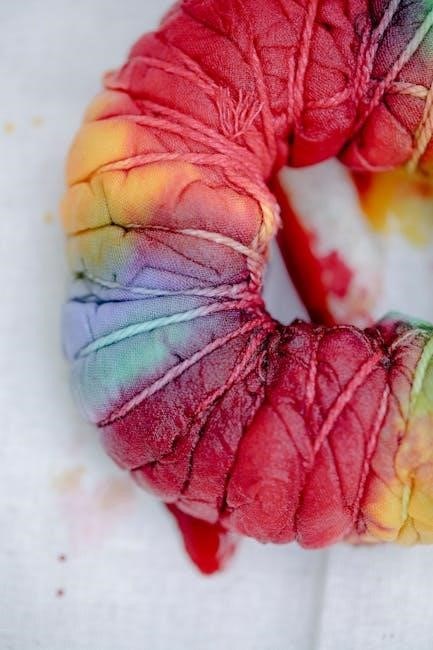
Control is key. Even folds are crucial; avoid large flaps obscuring smaller ones, hindering dye penetration. String, like Aunt Lydia’s Crochet Thread, offers superior control over rubber bands. Aim for a “pancake” thickness – roughly an inch – ensuring even dye absorption. Remember, a tightly bound, flat shape yields the most visually appealing results, maximizing color impact and pattern definition.
Dye Application Methods
Precision application is paramount! Squeeze bottles offer targeted dye placement, ideal for intricate designs and controlled color distribution. Ensure sufficient dye; stretching limited dye results in washed-out hues, especially on gray or darker fabrics. Immersion dyeing involves fully submerging the fabric in dye, creating saturated, all-over color.
Consider fabric moisture. After a soda ash soak, a spin cycle (without spraying) leaves fabric optimally moist for dye absorption. Remember the acid/base reaction – soda ash is basic, dyes are acidic, locking color into cotton fibers. Be mindful of existing prints, like a NASA logo, and protect them during application or use lighter shades.
Using Squeeze Bottles
Mastering the squeeze bottle unlocks design control! These bottles allow for precise dye application, crucial for detailed patterns and avoiding unwanted color mixing. Invest in quality bottles with adjustable tips for varying dye flow. Practice consistent pressure for even saturation, and work systematically to cover the fabric.
Targeted application is key. Carefully apply dye to specific sections of the folded or bound fabric, following your chosen pattern. Avoid over-saturation, which can lead to muddy colors. Remember, the fabric’s moisture level impacts absorption; optimally moist (after a spin cycle) yields best results. Consider the existing prints, like a NASA logo, and carefully navigate around them.
Immersion Dyeing
Dive into full-color saturation with immersion dyeing! This technique involves submerging the entire fabric piece into a dye bath, creating a solid, all-over color or layered effects. Ensure the dye is thoroughly dissolved and the fabric is fully submerged for even coverage. Agitate gently but consistently to promote dye penetration.
Control is still vital. While seemingly simple, immersion dyeing requires attention to detail. Consider the dye concentration and immersion time to achieve your desired shade. This method works well for base layers before applying other techniques. Remember the acid/base reaction – soda ash pre-treatment is crucial for locking in color. Be mindful of potential color bleeding during rinsing!
Color Combinations & Considerations
Unlock a world of chromatic possibilities! When selecting colors, consider the fabric’s base shade – darker colors work best on gray or non-white materials. Explore complementary color schemes for vibrant contrast, or analogous colors for harmonious blends. Think about how colors will interact when layered during techniques like spiral or bullseye.
Vibrancy is key. Investing in high-quality dyes, like those from Dharma Trading Co., yields superior results. Avoid diluting dyes excessively, as this leads to washed-out tones. Remember that screen prints, like a NASA logo, may affect dye absorption; lighter shades are safer around detailed designs. Plan your color placement strategically to maximize visual impact and avoid muddy mixtures.
Dye Setting & Rinsing Process
Lock in those brilliant hues! After dye application, allowing sufficient dwell time is crucial for the acid/base reaction between the dye and soda ash-treated fabric to fully develop. This process ‘locks’ the color into the fibers. Begin rinsing under cold water, gradually increasing the temperature until the water runs clear.
Prevent a colorful disaster. Rinse separately to avoid color bleeding, especially with vibrant shades. Gentle hand washing is recommended initially. Subsequent washes should be done with cold water and a mild detergent. Avoid harsh chemicals or prolonged sun exposure, as these can fade the colors. Proper rinsing and washing are vital for maintaining vibrancy and preventing unwanted dye transfer.
Preventing Color Bleeding & Maintaining Vibrancy
Keep colors popping! To minimize bleeding, thoroughly rinse your tie-dye creation until the water runs completely clear – this removes excess, unbound dye. Wash dyed items separately for the first few washes, especially those with intense colors. Utilize cold water and a color-safe detergent; hot water encourages dye release.
Long-lasting brilliance. Avoid direct sunlight when drying, as UV rays can fade the dye. Consider using a color-fixing agent during the final wash to further enhance color retention. Proper care extends the life of your tie-dye, ensuring vibrant designs for years to come. Consistent cold-water washing is key!
Troubleshooting Common Tie Dye Issues
Faded Colors: If colors appear washed out, insufficient dye was likely used, or the dye wasn’t properly set. Ensure adequate dye saturation and a thorough soda ash pre-soak for optimal color absorption. Consider re-dyeing lighter areas, focusing on proper dye application.
Muddy Colors: This often results from dye mixing during application or inadequate rinsing. Avoid overlapping colors excessively and rinse meticulously until the water runs clear. Using high-quality dyes from sources like Dharma Trading Co. can also minimize muddiness. Remember, acid/base reactions lock color into cotton!
Faded Colors
Diagnosing & Fixing Washed-Out Hues: Faded tie-dye often stems from insufficient dye concentration during the initial application. If you’re using a kit from Michaels or Jo-Anns, remember these may require more dye for vibrant results. Diluting dye to stretch it leads to paler shades, especially on gray or colored fabrics.
Preventative Measures & Redyeing: A robust soda ash soak is crucial; ensure the fabric is optimally moist (spin cycle recommended, avoiding direct spraying) before dye application. For existing faded pieces, consider redyeing – focus on thoroughly saturating the lighter areas with fresh dye for a revitalized look.
Muddy Colors
Understanding Color Mixing & Contamination: Muddy tie-dye results typically arise from unintended color mixing. This happens when dyes bleed into each other, particularly with close proximity or insufficient dye setting. It’s vital to consider color combinations; some pairings naturally create less vibrant, muddier tones.
Preventing & Addressing Unwanted Blends: Careful dye application – using squeeze bottles for precision – minimizes bleed. When dyeing around designs like a NASA logo, be extra cautious. Thorough rinsing after dyeing is essential to remove excess dye before it can continue mixing. If muddiness occurs, it’s difficult to fully correct, emphasizing preventative measures.
Working with Different Fabrics: Cotton vs. Synthetics
Fiber Reactivity & Dye Absorption: Cotton, a natural fiber, readily absorbs fiber-reactive dyes like Procion MX, resulting in vibrant, long-lasting colors. Synthetics, however, present a challenge. Polyester and acrylic require specialized dyes – often requiring higher temperatures and longer dye times – for adequate color retention.
Pre-Treatment & Dye Selection: For optimal results on cotton, a soda ash soak is crucial, preparing the fabric for dye bonding. Synthetics often need pre-treating to open the fibers. Always check dye compatibility with your fabric; using the wrong dye will lead to faded or washed-out results. Consider fabric blends carefully, adjusting techniques accordingly.
Advanced Techniques: Ice Dyeing & Low Water Immersion
Ice Dyeing: This captivating method involves placing ice over fabric, then sprinkling powdered dye on top. As the ice melts, it creates unique, watercolor-like patterns. Controlling color placement is less precise, yielding organic, unpredictable results. Experiment with dye concentrations and ice distribution for varied effects.

Low Water Immersion (LWI): LWI utilizes minimal water, allowing dyes to react directly with the fabric. This technique produces incredibly vibrant colors and sharp designs. It requires careful dye measurement and precise timing. LWI is ideal for intricate patterns and achieving maximum color saturation, offering a different aesthetic than traditional methods.
Print Considerations & Dyeing Around Designs (NASA Logo Example)
Protecting Existing Prints: When dyeing garments with pre-existing designs, like a NASA logo, careful planning is crucial. Some screen prints are resilient, surviving the dyeing process relatively unscathed, while others may fade or bleed. Test a small, inconspicuous area first to assess print stability.
Masking Techniques: To preserve the logo, use masking tape or a resist medium to shield it from dye. Apply the resist before folding and binding. For delicate prints, consider lighter dye colors or avoid direct dye contact altogether. Remember, the dye can still creep under edges, so precision is key. Achieving a clean result requires patience and attention to detail.
Creating the Optimal Dyeing Shape: Pancake Method
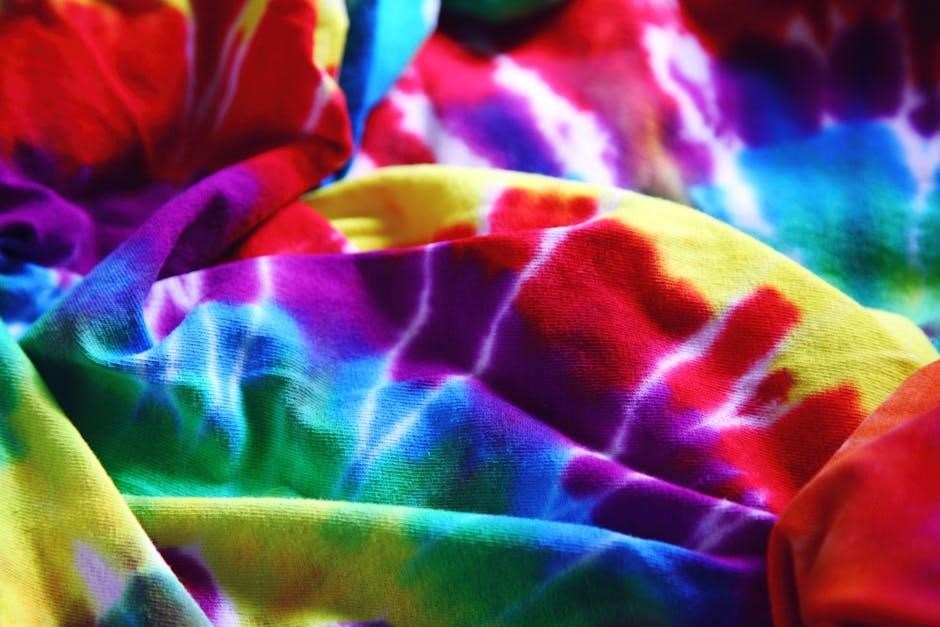
Achieving Even Saturation: The “pancake method” is vital for vibrant, consistent tie-dye results. Avoid creating bulky, three-dimensional shapes with your folds. Instead, aim for a flat, evenly compressed form, roughly an inch thick – resembling a pancake. This ensures dye penetrates all layers uniformly.
Even Folds are Key: Consistent folding is paramount. Large, floppy folds can obstruct dye from reaching smaller sections, leading to uneven coloring. Strive for neat, symmetrical folds that lie flat against each other. This maximizes dye absorption and minimizes unwanted white spots. A well-flattened “pancake” guarantees a more professional and visually appealing finished product.
Resources for Printable Tie Dye Patterns & Instructions
Expanding Your Creative Horizons: Numerous online resources offer printable tie-dye patterns and detailed instructions to inspire your projects. Websites like Dharma Trading Co. provide extensive guides and dye information, catering to both beginners and experienced enthusiasts. Pinterest is a treasure trove of visual inspiration, showcasing diverse folding techniques and color combinations.
Kits & Tutorials: Retailers like Michaels and Jo-Ann Fabrics often feature downloadable patterns with their tie-dye kits. YouTube channels dedicated to crafting offer step-by-step video tutorials, demonstrating various methods. Exploring these resources will unlock a world of possibilities, enabling you to confidently experiment and create unique, personalized tie-dye masterpieces.